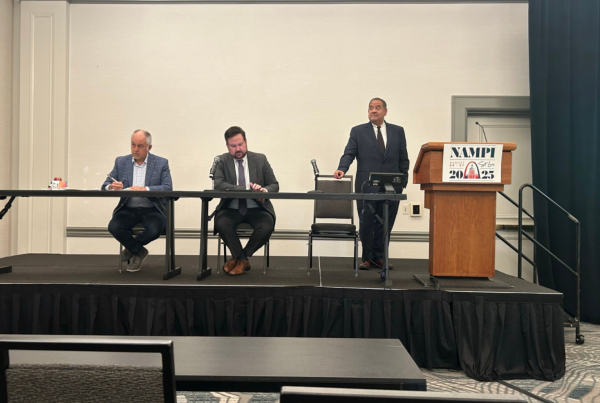
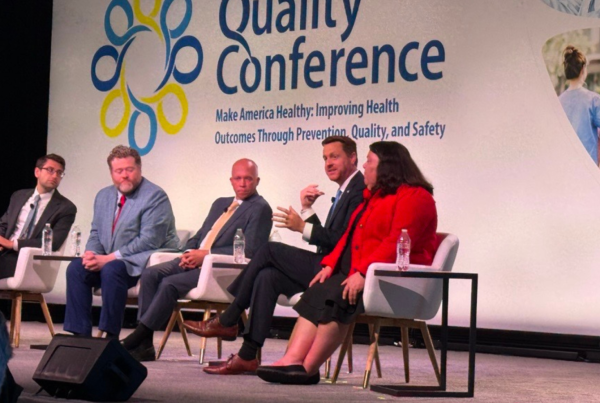
At CITIZ3N, we believe that when government agencies are empowered with the right tools and partnerships, they can deliver more equitable, efficient, and people-centered care. That belief was reinforced at this year’s Florida State of Reform Health Policy Conference, where I had the opportunity to attend a full day of policy-rich, forward-looking sessions dedicated to transforming healthcare across the public sector.
Held in Tampa, the event convened agency leaders, managed care organizations, tech innovators, and health equity advocates to tackle the complexities of reforming health policy in real time. Here’s what stood out—especially for those of us working at the intersection of public policy, Medicaid systems, and human-centered innovation.
AHCA’s FX Project: Medicaid Modernization at Scale
The opening plenary featured top leaders from the Florida Agency for Health Care Administration (AHCA)—including Secretary Shevaun Harris, Deputy Secretary for Medicaid Brian Meyer, and Deputy Secretary for Health Quality Assurance Kimberly Smoak—who set the tone for the day with an ambitious vision: the complete modernization of Florida’s Medicaid enterprise.
The Florida Health Care Connections (FX) project is a massive effort to rebuild the state’s aging Medicaid infrastructure. But it’s more than a tech refresh—FX is designed to improve data interoperability, reduce fragmentation, and enable more nimble, service-oriented program delivery.
The project embodies many of the same values CITIZ3N works toward: modular design, open data ecosystems, and digital experiences that meet people where they are. It was encouraging to hear how FX will position Florida to improve both operational agility and constituent outcomes—especially as federal funding deadlines and waiver renewal windows draw near.
Public Health Infrastructure: From Workforce Gaps to System Resilience
A key throughline in multiple sessions was the challenge of building durable public health infrastructure. The state’s efforts to invest in workforce development—through programs like Live Healthy Florida—and cross-sector pipeline initiatives were a major focus, particularly as the demand for Medicaid and safety-net services continues to climb.
This directly impacts how public sector agencies plan, staff, and deliver services at scale. Across panels, there was a growing awareness that operational transformation must go hand-in-hand with workforce transformation. That means integrating digital tools and automation thoughtfully, creating frictionless staff workflows, and partnering across state and local levels to fill systemic gaps.
Leveraging Technology to Serve the Whole Person
A standout discussion for our team at CITIZ3N centered around technology’s role in whole-person care. Speakers explored how AI, digital health platforms, and wearables are reshaping how public health systems identify need, deliver care, and measure outcomes—particularly in Medicaid populations.
But innovation isn’t just about the tech. It’s about access. Equity-focused leaders raised crucial points about broadband gaps, device access, and cultural competence in digital outreach. These are solvable challenges—especially when design is informed by real constituent voices and grounded in behavioral insight.
For CITIZ3N, this reinforced the importance of designing for inclusion, ensuring that any tool or platform deployed by public agencies truly works for the people it’s meant to serve.
Integrated Responses to Complex Needs: CORE and Housing as Healthcare
Sessions on Florida’s Coordinated Opioid Recovery (CORE) program and housing as healthcare showcased how Florida is piloting cross-agency, wraparound approaches to complex challenges.
CORE is a statewide model that connects behavioral health, EMS, and social services into a unified recovery network—an effort made possible by strong interagency coordination and smart use of data. Similarly, the push to treat housing instability as a healthcare issue marks a shift in how Medicaid and managed care organizations approach long-term health outcomes.
Both sessions emphasized the same key principle: siloed services don’t solve complex problems. These models show the value of collaboration across systems—and mirror the integrated thinking that CITIZ3N advocates for in every state we support.
Preparing for Federal Policy Shifts
The day closed with a forward-looking conversation on potential federal health policy changes—from waiver reform to CMS access mandates and potential changes to Medicaid funding structures. While federal guidance remains in flux, what’s clear is that states need to stay agile and proactive in their modernization efforts.
CITIZ3N’s work is rooted in helping agencies stay ahead of these shifts—building not just for compliance, but for long-term adaptability and equity. As Florida continues to invest in systems like FX and integrated service delivery, the state is well-positioned to respond to the evolving federal landscape.
Final Thoughts: Florida Signals What’s Possible
The 2025 State of Reform conference made one thing clear: Florida is not waiting for change—it’s building it. Through Medicaid modernization, investment in public sector capacity, and integrated care strategies, the state is shaping a health system built for the future.
At CITIZ3N, we are inspired by these bold moves. They reflect a growing national momentum to reimagine public systems as platforms for dignity, access, and trust. We’re proud to be in this work alongside agencies like AHCA—and we look forward to continuing to support states that are ready to lead.