
Key Takeaways for Government Agencies
- Modernization is urgent. Legacy eligibility systems cannot handle OBBA’s new work and exemption requirements. States need configurable, compliance-ready infrastructure now.
- Data integration is essential. Medicaid does not exist in isolation — interoperability with SNAP, TANF, workforce, and education systems is critical to reduce errors and prevent unnecessary disenrollments.
- Communication determines outcomes. Members who fail to understand or track requirements are at risk of losing coverage despite being eligible. Outreach strategies must be modernized alongside systems.
Medicaid programs stand at a crossroads. With the One Big Beautiful Bill Act’s (OBBA’s) work requirements set to reshape eligibility nationwide, the 2025 MESC Conference in Milwaukee served as a forum for states to share lessons, confront challenges, and explore solutions. Over the four days, leaders emphasized the urgent need to modernize systems, strengthen data integrations, and put equity at the center of compliance strategies.
Dan Harris on Steady Progress
The conference opened with a keynote from Dan Harris, retired journalist, author of 10% Happier, and long-time ABC News anchor. Harris’s remarks centered on resilience and the power of incremental progress. He shared his personal journey of balancing high-stakes responsibilities while cultivating mindfulness.
For agencies preparing to meet OBBA’s complex work and reporting requirements, Harris’s message offered a timely reminder: transformation does not need to be overwhelming. By making consistent, measured progress — the “10%” mindset — states can build sustainable infrastructure, strengthen compliance, and maintain member trust without collapsing under the weight of sudden reform.
CITIZ3N Panel: Medicaid Work Requirements on the Brink
One of the most well-attended sessions at MESC was “Medicaid Work Requirements on the Brink: Avoid the Coverage Collapse by 2027.” Moderated by CITIZ3N, the panel brought together Victor Sanchez (CITIZ3N), Matt Salo (Salo Health Strategies), John Crouse (Conduent), and Brandon Lewis (West Virginia Department of Human Services).
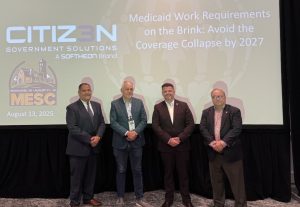
Victor Sanchez (far left), Matt Salo (middle left), Brandon Lewis (middle right), John Crouse (far right).
Panelists emphasized that Medicaid work requirements are no longer a distant policy debate — they are an imminent operational reality. States that delay modernizing their eligibility systems risk disenrolling large numbers of members, many of whom should qualify for exemptions. The discussion highlighted the importance of building compliance-ready infrastructure that can adapt to evolving rules while ensuring that vulnerable populations, such as veterans, individuals with disabilities, and pregnant individuals, retain access to coverage.
A Broader Conversation on Modernization
Throughout the week, conversations across breakout sessions and plenaries circled back to the same underlying challenge: the need for modernization. Medicaid eligibility and enrollment systems must now handle more complexity than ever before, from new work-hour requirements to layered exemptions and waiver processes.
Agencies acknowledged that their current systems, built decades ago, are ill-equipped to manage these demands.
The call for data interoperability came through loud and clear. Leaders from multiple states stressed that eligibility cannot be managed in isolation. Medicaid intersects with SNAP, TANF, education, and workforce programs, and compliance will increasingly depend on the ability to share data seamlessly across these systems. Without robust integrations, agencies risk creating bottlenecks for members and staff alike.
The Human Impact of Communication Gaps
Another theme was the need for stronger member communication strategies. While states are making strides in system modernization, many noted that outreach to beneficiaries remains fragmented and heavily manual. This creates a dangerous gap as compliance requirements expand.
If members are not informed of their obligations, or if they struggle to navigate complex paperwork, they risk losing coverage despite meeting eligibility criteria. Several speakers pointed out that effective modernization must go hand-in-hand with robust communication tools that deliver timely, accurate, and accessible information across channels. Without this, agencies risk high levels of disenrollment driven not by non-compliance, but by confusion.
Keeping Equity at the Center
Equity was also a recurring theme, with agencies and advocates underscoring the importance of designing systems that safeguard coverage for those most at risk of falling through the cracks. Ensuring that individuals with disabilities, caregivers, veterans, and those facing unexpected life events can maintain access to care must remain central to any modernization strategy.
Looking Ahead: Building with Purpose
As MESC 2025 made clear, the clock is ticking. States face a narrowing window to prepare for OBBA’s compliance deadlines. The conference served as both a warning and an inspiration: the risks of delay are substantial, but so are the opportunities for transformation.
CITIZ3N remains committed to supporting agencies through this process. Our VERIFY platform is designed to reduce administrative burden, improve oversight, and provide the flexibility states need to manage evolving federal requirements. By combining modernization with mindfulness, states can avoid disruption and ensure Medicaid continues to serve those who depend on it most.
To learn more about VERIFY and how it can support your agency’s compliance strategy, visit citiz3n.com/verify.


